

Fed Rate Hike September 2026: What It Means for Mortgage Rates and San Diego Home Buyers and Sellers
The Fed Did Not Raise Your Mortgage Rate This Week. Here Is What Did.
Jen Kleist, REALTOR® | Coldwell Banker West | DRE #02228818
Rate figures current as of Wednesday, September 16, 2026.
Mortgage rates have been climbing, and this week they hit their highest level since January 2025. On Wednesday the Federal Reserve raised its benchmark rate for the first time in three years. The headlines make it sound like the door just closed on buying a home. It did not. But the market has shifted, and understanding why helps you make a better decision whether you are buying or selling.
Where rates are
As of Wednesday, the average 30 year fixed rate was 7.24 percent, according to Mortgage News Daily. The 15 year was 6.84. FHA and VA loans were pricing about four tenths of a point lower, around 6.8 percent, which matters if you are a veteran or using government backed financing out here.
You may see a lower number in the news, around 6.76. That is Freddie Mac's weekly survey. It lags real lender pricing by several days and does not account for points, so it rarely matches an actual quote.
What actually moves mortgage rates
Most people think the Fed sets mortgage rates. It does not. The Fed sets a short term rate that affects credit cards and HELOCs. Mortgage rates follow the 10 year Treasury yield, and that yield moves on one thing above all: inflation expectations.
When lenders hand over money for 30 years, they need to be paid back in dollars that still hold value. If investors think inflation will stay high, they demand more return up front, and your rate goes up. That is what has been happening. Oil prices have surged this year because of conflict in the Middle East, inflation is still running around 3.4 percent against the Fed's 2 percent target, and the 10 year Treasury has climbed from under 4 percent in February to over 5 percent this week.
What the Fed did, and why rates went up anyway
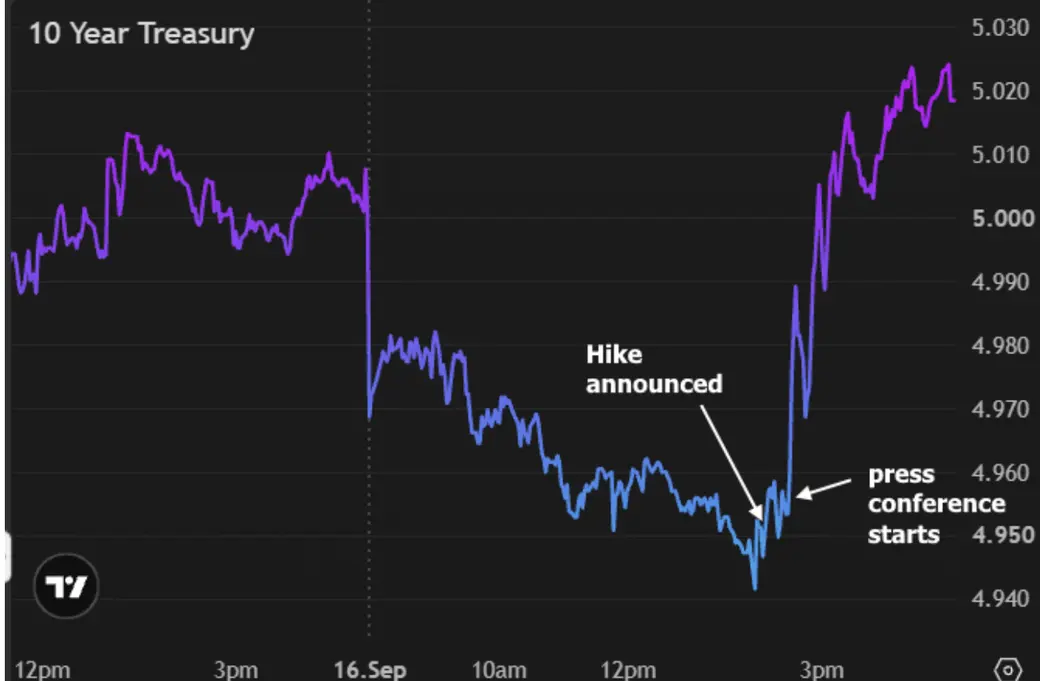
On Wednesday the Fed raised its rate a quarter point, to 3.75 to 4.00 percent. The vote was unanimous. Markets had expected it for weeks, so when it was announced at 2:00, mortgage rates barely moved.
Then Chair Warsh held his press conference and said the economy is strong, inflation has not improved, and the Fed needs to "remove some accommodation." Traders heard "some" and understood there is more to come. The Fed's own projections back that up. Sixteen of eighteen officials expect at least one more hike this year, and none see a cut before 2028.
So it was not the hike that pushed mortgage rates higher. It was the message that more hikes are coming. That is the useful part: the next move in rates will depend on inflation data and what the Fed says about it, not on the calendar.
It is also worth saying that a Fed serious about inflation is what eventually brings mortgage rates back down. The question is how long that takes, and nobody knows.
What this means for buyers
You have leverage. When rates jump, some buyers step back. Fewer buyers means you can actually negotiate instead of competing in a bidding war.
You get your contingencies back. On rural property, being able to properly inspect a well, a septic system, and access is worth far more than a quarter point in rate.
Sellers will help. Many sellers who need to move will pay to buy down your rate or cover closing costs. That money comes out of the sale, not your savings.
Your rate is temporary. Your price is not. You can refinance later. You cannot go back and renegotiate what you paid. Buying in a quieter market and refinancing when rates ease is a strategy, not a consolation prize.
Ask about assumable loans. VA, FHA, and USDA loans can often be assumed at the original rate. Plenty of homes in our mountain communities were financed with USDA. A seller with a 3 percent note is worth a second look.
What this means for sellers
San Diego County still favors sellers. In August the median home sold in 28 days, inventory was down from last year, and prices were up close to 6 percent. Well priced homes are selling.
The key word is priced. Buyers at 7 percent are payment sensitive. Overpricing does not get you a higher number, it gets you time on market, and that is what actually costs you money.
If you need to sell, you have more tools than cutting your price:
Offer a rate buydown. It usually costs you less than a price reduction and does far more for the buyer's monthly payment. This is the incentive buyers respond to most right now.
Credit closing costs. Many buyers are stretched on cash, not on qualifying.
Get a pre-listing inspection. Know the condition of your well, septic, and roof before you list, so you handle it on your terms instead of renegotiating at day 17.
Be flexible on terms. A rent back or a longer or shorter escrow can win you a stronger buyer without touching your price.
The bottom line
Rates are higher because inflation is stubborn and the Fed just said it is not done. That is uncomfortable, and it is not the whole story. Buyers have room to negotiate they did not have two years ago. Sellers who price realistically are still closing.
Rates are moving daily, so this is a snapshot. What matters is running your own numbers with a current quote instead of reacting to a headline. If you want to talk through what this looks like for your situation, I am happy to walk through it with you.
Jen Kleist, REALTOR® Coldwell Banker West | DRE #02228818 619-985-3618 | jenkleist@gmail.com | jenkleist.com
Categories
Recent Posts







GET MORE INFORMATION