

The First Five Feet
Zone 0 Is Getting Closer: What the August 2026 Draft Means for Homeowners
If you own a home in Descanso, Alpine, Pine Valley, Guatay, or anywhere else in our backcountry, you have probably heard the phrase "Zone 0" by now. The California Board of Forestry and Fire Protection released its latest draft of the rule in August, and it is the clearest picture yet of what will actually be required.
I read the full summary and the regulatory text so you don't have to. Here is what it says, what changed from earlier versions, and what it means if you are planning to buy or sell in the next few years.
What Zone 0 is and why it is happening now
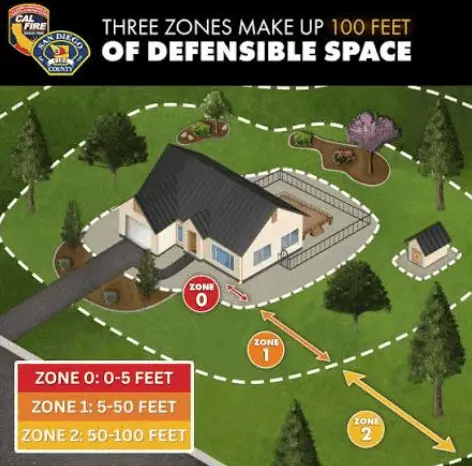
Zone 0 is the first five feet around your house and any attached deck, stairs, or pergola. Fire science has been pointing at this strip for years. It is where wind-blown embers land, and it is where most homes that burn in a wildfire actually ignite.
After the Los Angeles fires in January 2025, the state directed the Board to write defensible space rules specifically for this five-foot area. That direction came from Assembly Bill 3074, Senate Bill 504, Assembly Bill 1455, and an executive order from the Governor. The Board spent about 15 months holding workshops, doing site visits, and hearing from homeowners, fire professionals, and local governments before landing on this draft.
Who this applies to
The rule covers all State Responsibility Areas, which are the parts of the state where CAL FIRE has primary responsibility for wildfire protection. That includes our mountain communities. It also covers Very High Fire Hazard Severity Zones inside city and county fire jurisdictions.
If you live in the Descanso, Alpine, Pine Valley, or Guatay area, assume it applies to you.
The biggest change: your trees can stay
Earlier discussion around Zone 0 had a lot of people worried about losing mature oaks, pines, and cedars that sit close to the house. The August draft allows existing trees to remain in Zone 0 as long as they are maintained. That maintenance includes:
- No dead or dying branches
- All branches at least 10 feet from chimneys and stovepipe outlets
- No live branches under the eaves
- Branches at least 5 feet above the roof
- Lower limbs (ladder fuels) removed from the bottom 6 feet, or the lower third of the tree, whichever is less
- Branches at least 1 foot from the wall where there is no eave
One thing to note: once the rule takes effect, no new trees can be planted in Zone 0. Existing trees are grandfathered in. New ones are not.
The two-part zone
The draft divides Zone 0 into two areas, and the line between them depends on your eaves.
The safety zone. This is the strip directly against the house, out to the edge of your eave drip line. If you have 12-inch eaves, it is 12 inches wide. If you have 36-inch eaves, it is 36 inches wide. It is always at least 1 foot, and it extends to 2 feet from any window, door, or vent. Nothing living or combustible goes here. Gravel, pavers, bare soil, and non-combustible hardscape are all fine.
The outer zone. From the edge of the safety zone out to 5 feet, some plants are allowed:
- Lawn and low ground covers kept under 3 inches
- Non-woody plants between 3 and 18 inches tall, planted in clumps no bigger than 1 square foot, spaced apart by 1.5 times the height of the tallest plant
- Potted plants in non-combustible pots (metal, ceramic, concrete) no larger than 5 gallons, no taller than 18 inches, and easy to move
Examples the Board gives for acceptable plants: bulbs, impatiens, begonias, petunias, poppies, yarrow, non-thatching succulents, creeping thyme, beach strawberry, and mosses.
What is not allowed anywhere in Zone 0: bark mulch, wood chips, firewood, fallen leaves and needles, and woody shrubs. The area under decks and stairs has to be kept clear as well.
Decks, fences, gates, and sheds
Decks, stairs, and pergolas attached to the house count as part of the structure, and the draft requires a 5-foot vegetation-free buffer around them. If you have foundation plantings along a deck, this is probably the change that will affect you most.
Fences and gates that attach to the house, or come within 1 foot of it, need a 5-foot non-combustible section starting at the point of attachment. The most common fix will be replacing a wood gate with a metal one. No new combustible fences or gates can go within 5 feet of the house after the rule takes effect, but repairs to existing wood fences can still use wood.
Sheds and outbuildings under 120 square feet are not allowed in Zone 0 unless they are built entirely of non-combustible materials.
The timeline
The draft phases things in for existing homes. New construction has to meet the full rule on day one, where "new" means the building permit application was filed after the effective date.
| When | What existing homes need to do |
|---|---|
| Immediately on adoption |
|
| Within 3 years |
|
| Within 5 years (CAL FIRE sets the exact deadline, no sooner than 3 years) |
|
The Board is clear that inspections will focus on education and measurable progress rather than immediate penalties. For homeowners, the stated goal is to show effort over the five-year period.
Local flexibility
Local fire agencies can adopt alternative practices that account for things like topography, lot size, and construction materials, as long as the governing body approves them and the agency finds them equally protective. That means some of the details could look slightly different depending on where you are.
What this means if you are selling
Buyers in our area already ask about defensible space and insurance. Once Zone 0 is adopted, expect it to come up in inspections, in FAIR Plan and private insurance underwriting, and in disclosure conversations.
The practical advice is simple: start with the free stuff. Clear the gutters, pull the mulch back from the house, remove dead wood, and take a hard look at what is growing against the foundation. Those steps cost little, they are required in the first phase regardless, and they photograph well when a listing goes live.
Bigger items like a metal gate or moving foundation plantings can wait for the later phase, but knowing the list now lets you plan and budget rather than react.
What this means if you are buying
Look at the five feet around any home you are considering. Ask whether the trees near the roof have been trimmed, whether there is mulch against the house, and whether the gate touching the house is wood. None of these are deal-breakers, but they are costs and they are worth knowing before you write an offer.
Resources and next steps
This is still a draft. The Board is accepting public comments at PublicComments@bof.ca.gov, and you can track updates on the Board's Zone 0 webpage.
The state has said funding and hands-on help will come through the California Climate Bond, CAL FIRE grants, and California Conservation Corps crews, particularly for underserved communities and homeowners who need physical assistance. Nothing specific has been announced for our area yet, but it is worth watching.
If you would like a second set of eyes on your property, I am happy to walk it with you and talk through what the draft would mean for your specific setup. Call or text me at 619-985-3618, email jenkleist@gmail.com, or book a time at calendly.com/jenkleist/30min.
Jen Kleist is a REALTOR® with Coldwell Banker West (DRE #02228818) and lives in Descanso. This post summarizes a draft regulation and is not legal advice. Requirements may change before the rule is finalized.
Categories
Recent Posts


GET MORE INFORMATION