

Running the House When You're the Only Adult Home Half the Time
Home Base: Real Estate for First Responder Families
Part 3: Running the House When You're the Only Adult Home Half the Time
This series is written for firefighters, law enforcement, EMS, nurses, military families, and everyone whose work doesn't fit a nine to five. Part 1 was the questions people ask a fire wife. Part 2 was how overtime counts on a home loan. This one is about the house itself, and who's actually running it.
Here's a law of the fire service that I have never once seen broken: nothing in the house fails while he's home.
The water heater waits until day two of a strike team assignment. The garage door opener dies during a fire siege. The mystery leak under the kitchen sink shows up when he's three counties away and can't take a phone call, let alone look at it. If you're a fire spouse, you're nodding right now. If you're married to a deputy or a nurse working nights, same story, different uniform.
After 20+ years of this, I've stopped calling it bad luck and started calling it a system requirement. If your household runs with one adult gone a quarter to half the time, the house has to be set up so the adult who's home can handle anything it throws at you. Here's what that actually looks like.
Know your shutoffs before you need them
This is the single highest value thing on this list, and it takes 20 minutes on a random Saturday.
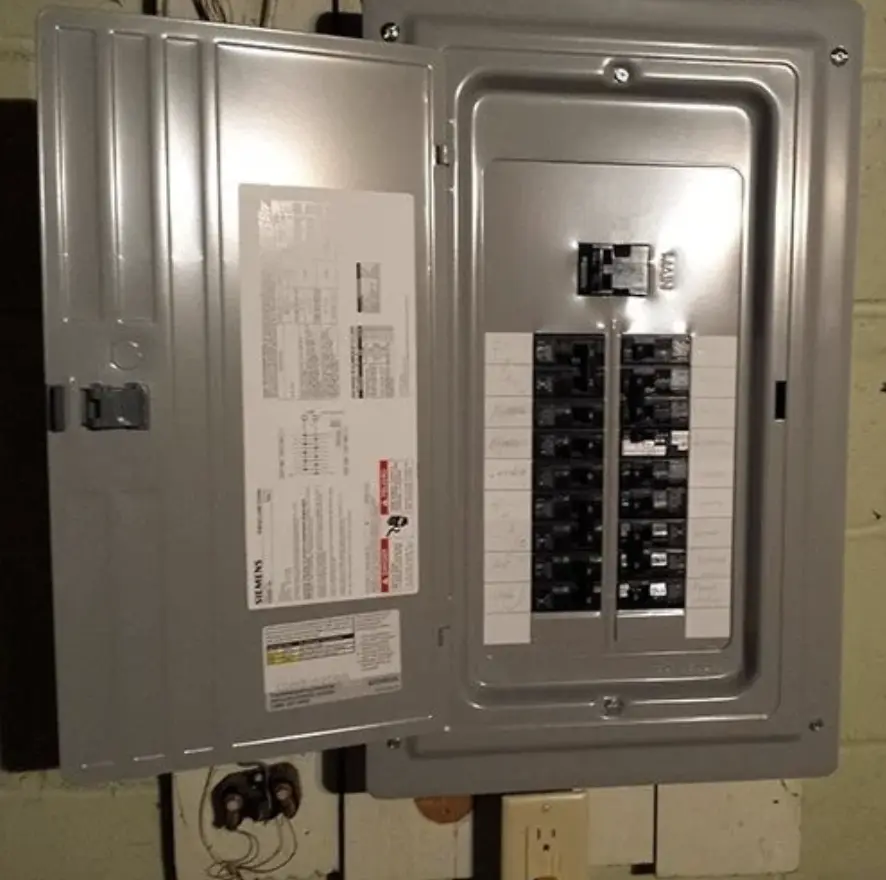
Walk the house together and find three things: the main water shutoff, the gas shutoff, and the breaker panel. Actually turn the water valve so you know it moves and you know which direction. Know where the gas meter wrench lives (and if you don't own one, they're a few dollars at the hardware store, and it should live zip-tied near the meter, not in a kitchen drawer). Label the breaker panel honestly, not the faded guesses the last owner left behind.
A burst supply line with a fast shutoff is a mop-up job. The same line with a 40 minute panic while you call him at a fire camp that has no reception is a flooring claim. The difference is entirely in the 20 minute walkthrough.
Build your own bench
Every household with a deployable adult needs its own roster: a plumber, an electrician, a handyman, and a tree guy that YOU have vetted and YOU can call. Not "the guy he knows from the station." Your list, saved in your phone, with at least one of each who has actually been to your house before.
The middle of an emergency is the worst possible time to be reading reviews of strangers. Up here in the mountains it matters double, because our trades are spread thin and the good ones book out. Have the relationships before you need them.
And a note for my fellow fire spouses: it is not disloyal to hire out a job he could do himself. A repair that waits six weeks for his next stretch of days off isn't free. It's just slow, and sometimes slow gets expensive.
Put the property on a calendar, not on his days off
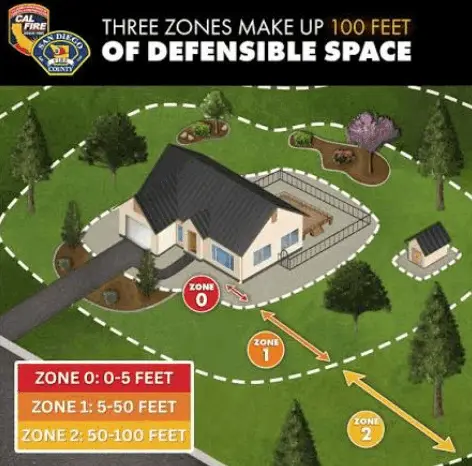
Defensible space doesn't care about the shift schedule. Neither does the rainy season, the wood pile, or the gutters.
The trap is letting home maintenance live in the "when he's home" pile, because peak fire season, when he's gone the most, is exactly when the brush clearance and ember prep matter most. The fix is boring and effective: the recurring property tasks go on the family calendar by month, and whoever is home does them or hires them done. Weed abatement in spring. Gutters and vents before the wind events. Wood in before the cold. The house doesn't wait for the engine to back into the driveway, so the schedule can't either.
The solo evacuation plan
We covered evacuation prep in my wildfire series, but here's the fire family version: your plan has to work with one adult, because that's the most likely scenario. If there's a fire close enough to evacuate your neighborhood, there's a very good chance he's on it, not home helping you load.
So the plan assumes it's you, the kids, and the animals. Go bags you can carry in one trip. Animal crates staged where you can reach them, and a trailer plan you can hitch and pull yourself if you have large animals. Photos of documents in the cloud so nothing depends on grabbing the file box. A kid old enough to carry something gets a job, and they practice it, because kids with a job stay calmer than kids watching you hurry.
The strange comfort of fire family life: nobody plans an evacuation more realistically than the household whose firefighter won't be there for it.
The part where I tell you why this is a real estate post
Because all of this is exactly the lens I use when I help a first responder family choose a house.
When I walk a property with a fire family, I'm not just looking at the kitchen. I'm looking at how far the propane tank sits from the house, whether the lot is a defensible space project or a defensible space nightmare, whether there's a second way out of the neighborhood, and whether this is a house one adult can realistically run for two weeks at a stretch. That's not a checklist I learned in a class. It's the one I live.
If your household runs on a shift calendar and you're thinking about buying, selling, or just wondering whether your current place is set up right, reach out. This is my favorite conversation to have.
Homes for Heroes - See if you qualify
Previously: Part 1, Tales from a Fire Wife & Mom. Part 2, Overtime and Your Home Loan. Next up: what first responder families should actually look for in a house.
Jen Kleist, Realtor® DRE #02228818
Categories
Recent Posts





GET MORE INFORMATION