

What Actually Shows Up When a Fire Starts
What Actually Shows Up When a Fire Starts
I get some version of this question on almost every showing in the backcountry. A buyer stands on a deck, looks out at the oaks and the chaparral running up the ridge, and asks what happens if a fire starts.
It is a fair question, and the honest answer is a good one. It just takes longer than a sentence.
Most people picture one engine coming up a two lane road. That is not how it works in San Diego County. What actually happens is a coordinated response involving aircraft, hand crews, engines from multiple agencies, and a dispatch system that starts stacking resources before anyone has confirmed what is burning. Understanding that response is part of understanding property in the wildland urban interface.
We have an air attack base right here
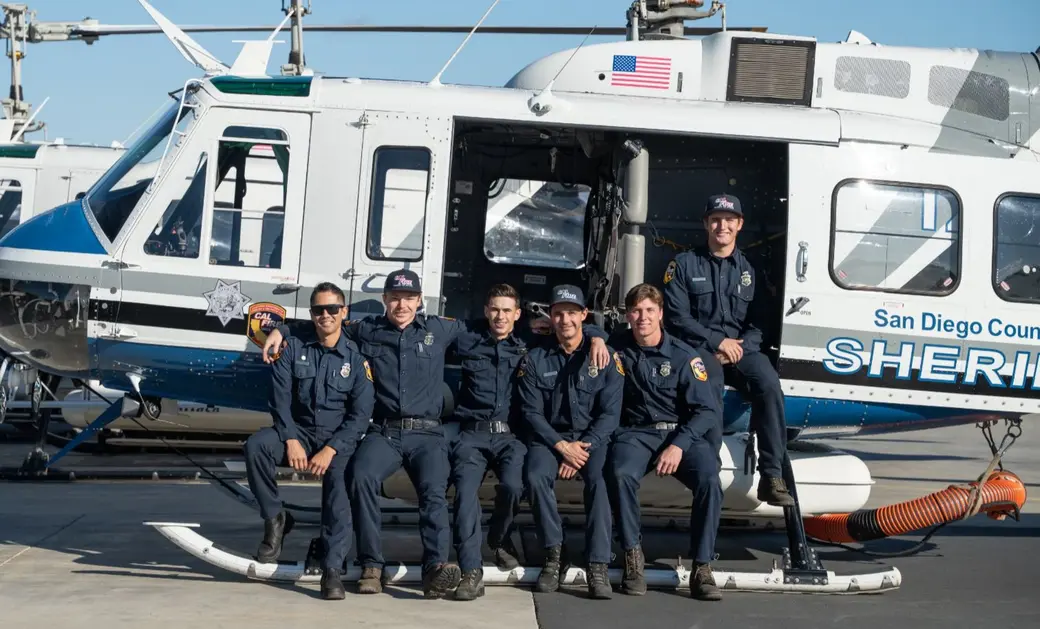
Ramona Air Attack Base has been operating since 1957, which makes it the oldest air attack base in the CAL FIRE system. It reopened this past July after roughly twenty million dollars in reconstruction, and it now carries five permanently assigned aircraft.
That fleet includes a C-130 Hercules air tanker that drops 4,000 gallons of retardant in a single pass, two S-2T air tankers at about 1,200 gallons each, an OV-10 air tactical aircraft that circles above and directs the whole air show, and a Sikorsky S-70 CAL FIRE Hawk helicopter.
The Fire Hawk matters more than the numbers suggest. It carries 1,000 gallons of water, it has a hoist for rescues, and during the day it can deliver up to nine firefighters directly into terrain that would take a ground crew an hour to hike.
It is also night capable, which is newer than most people realize. Under night vision goggles the crews fly water drops, mapping, and reconnaissance after dark, and the hoist stays available for rescues. Nighttime is usually when conditions turn in the crews' favor, since winds lay down and humidity comes up. Fires used to get a free run between sunset and sunrise in a lot of this country. That gap is closing.
The rebuild was not cosmetic. The old plumbing at Ramona meant a tanker sat on the ground for twenty minutes waiting to reload. The new retardant system cut that to about eight. On a wind driven fire, twelve minutes per turnaround, across multiple aircraft, across several hours, is the difference between a fire you talk about next week and a fire you talk about for twenty years.
CAL FIRE's stated goal statewide is to put initial attack aircraft over a fire quickly enough to hold 95 percent of them to ten acres or less. Having a fully modernized base inside the county is a large part of how that standard gets met here.
The ground side
Air support gets a lot of attention because it photographs well. It does not put fires out by itself. Retardant slows a fire down and buys time. People with hand tools and hose finish the job.
The station coverage across the unincorporated county is dense for how rural much of it feels. San Diego County Fire and CAL FIRE San Diego Unit operate under a cooperative agreement, so an engine rolling out of a small backcountry station is part of a unit covering both San Diego and Imperial counties that can pull from every direction.
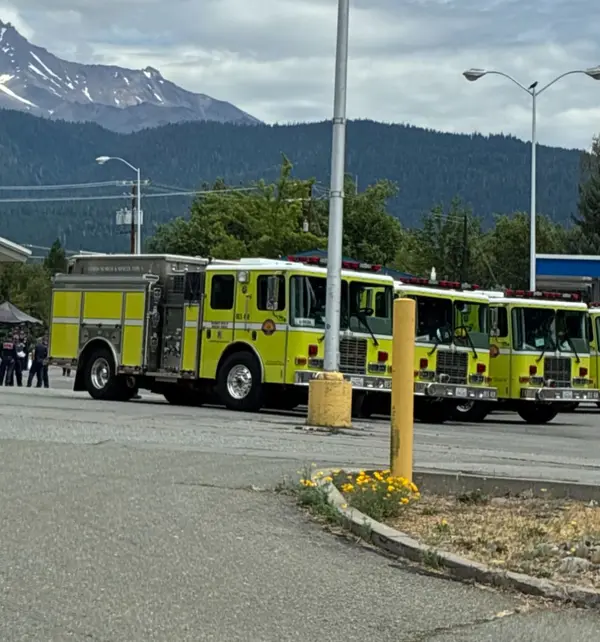
Dispatch runs through the San Diego Interagency Communications Center in El Cajon, which coordinates multiple agencies on the same incident. Add the California Master Mutual Aid system, which is the reason you see strike teams with city names on the doors from four hundred miles away parked on a rural highway within a day, plus standing agreements that let the county request military aircraft out of local bases when things scale up.
None of that is improvised when the smoke shows. It is prearranged, practiced, and staffed year round.
You saw it work recently on the Thorne Fire, where both the C-130 and the Fire Hawk went to work. The unit chief made the point better than I can: the ground crews still have to get in there and do the work, but the difference is whether they are doing it on a twenty acre fire or a hundred acre fire.
Why speed is the whole ballgame
Fire behavior in this county is driven by three things that happen to line up several times a year.
The fuel is chaparral. Chamise, manzanita, ceanothus, scrub oak. It is adapted to burn, it carries a lot of energy, and by late summer the live fuel moisture in it drops to levels where it ignites readily.
The terrain is steep and cut with drainages. Fire moves uphill faster than it moves on flat ground, and canyons channel wind the way a chimney channels draft.
Then there are the Santa Anas. High pressure builds over the Great Basin, air spills west and downslope, and compression heats it and strips the humidity out of it. Single digit relative humidity, temperatures well above normal, and sustained wind through the passes. Under those conditions a fire throws embers well ahead of itself, sometimes a mile or more, so it is not one fire front but several starting simultaneously in front of the one you are watching. The other thing Santa Ana events do is prevent overnight humidity recovery, which takes away the window when crews would normally gain ground.
This is why rapid initial attack is the entire strategy. Almost every fire that became a disaster in Southern California was a small fire first, during a period when conditions were extreme and the response could not get on top of it fast enough. The system here is built around compressing that window.
Weather forecasting has become part of the response too. Red Flag Warnings come with real lead time now, and CAL FIRE pre positions engines and staffs up before a wind event rather than after. That is a change from twenty years ago that does not make headlines.
Where this comes from
Here is the part I think gets lost.
None of this is free, and none of it appeared on its own. The C-130 fleet exists because the state spent years acquiring and converting seven aircraft from the Coast Guard. The Ramona rebuild was a state capital project. The county's Fire Hawk was a Board of Supervisors purchase, with the utility contributing operating funds annually for the next decade. Local stations are funded through a mix of county general fund dollars, state mission funding, and in some communities a special district assessment that shows up on your property tax bill.
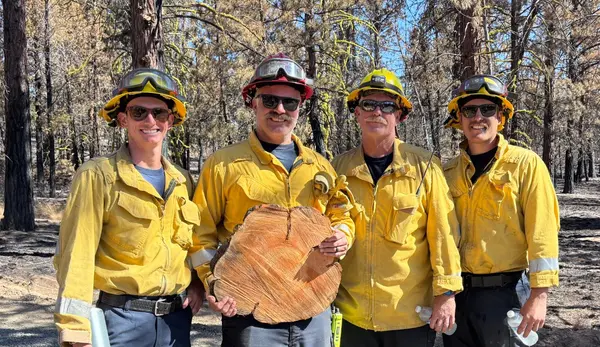
Nobody enjoys paying property taxes. I have never once had a client look at the annual bill and feel good about it. But when you buy in the wildland urban interface in this county, part of what you are buying is a fire response infrastructure that a lot of rural places in this country simply do not have. Five aircraft based inside the county. Staffed stations in communities of a few hundred people. A mutual aid system that can put a hundred engines on a ridge overnight. Career firefighters, hotshot crews, hand crews, and aviation staff who train on this terrain specifically.
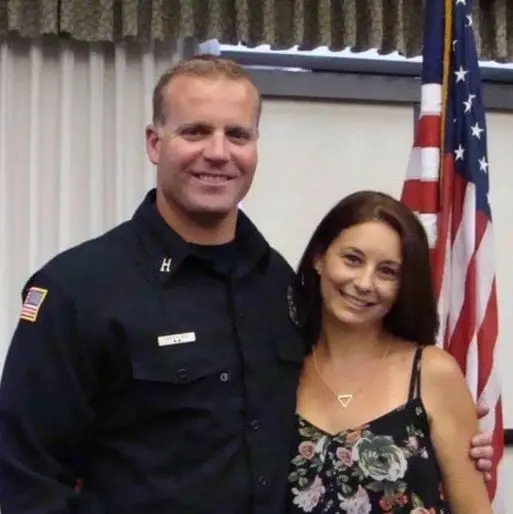
I am married to a Fire Captain and my son works for CAL FIRE, so I will admit my perspective is not neutral. But I have also watched what the response looks like from the inside for a long time, and I think buyers deserve to hear about it in the same conversation where they hear about defensible space and insurance.
What to do with this
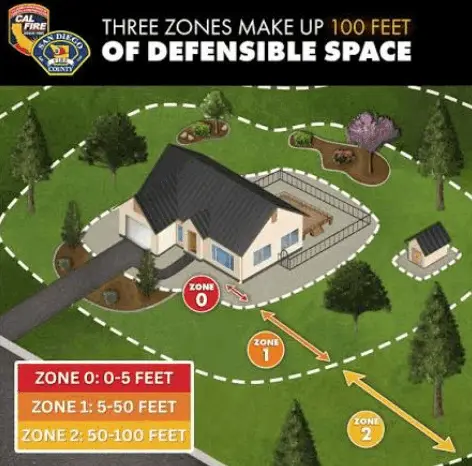
If you are buying in the interface, the response capability is one input. The others are on you. Zone Zero clearance in the first five feet around the structure, ember resistant vents, a Class A roof, a water source, and a realistic evacuation plan with more than one route out. Those choices change how your home performs in the minutes before anyone arrives, and they change what insurers are willing to write.
Buying in these areas is not a decision to ignore fire. It is a decision to live somewhere that takes fire seriously, backed by one of the most capable wildfire response systems anywhere.
If you are thinking about a move into San Diego County's rural and backcountry communities and you want a straight conversation about fire, insurance, and what a specific property actually looks like on those fronts, reach out. This is the part of the job I care most about getting right.
Jen Kleist, REALTOR® Coldwell Banker West DRE #02228818 | NMLS #2276965 Backcountry and East County San Diego
This post is provided for general informational and educational purposes only. It is not insurance, legal, tax, or fire safety advice, and it is not a guarantee of any outcome. Wildfire response capability, agency resources, and funding sources change over time, and conditions at any individual property vary. Nothing here should be relied on in place of guidance from a licensed insurance professional, your local fire agency, or the appropriate government authority. For questions about defensible space requirements, evacuation planning, or fire hazard severity zone designations for a specific address, contact CAL FIRE or your local fire district directly. For questions about coverage, contact a licensed insurance agent.
Categories
Recent Posts

GET MORE INFORMATION