

Home Base: Real Estate for First Responder Families
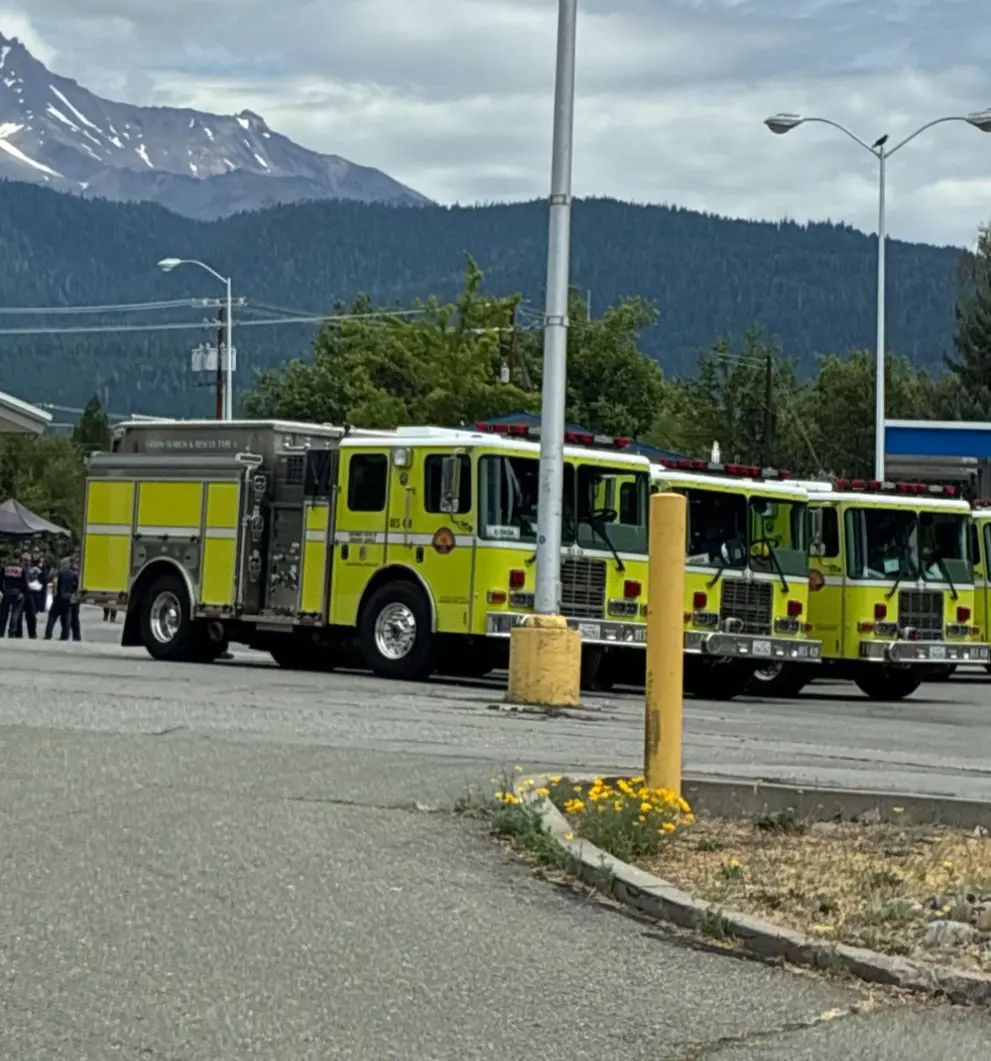
Home Base: Real Estate for First Responder Families
Part 1: Tales from a Fire Wife & Mom (of Over 20 Years)
This is the first post in a new series written for firefighters, law enforcement, EMS, nurses, military families, and everyone whose work doesn't fit a nine to five. Buying and owning a home looks a little different when your paycheck, your schedule, and your life don't match the standard mold. Before we get into the practical side of any of that, I want to start with the life itself, because it's the part I know best.
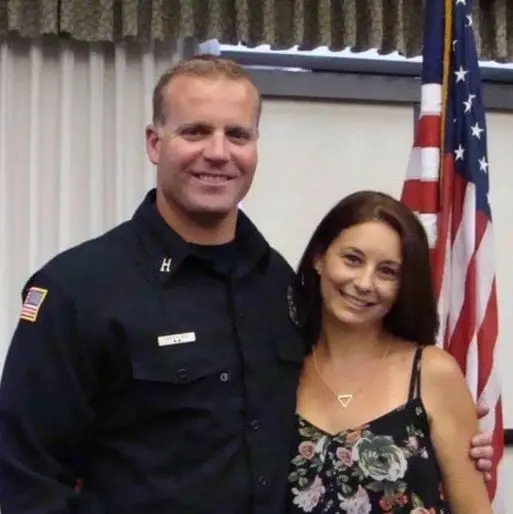
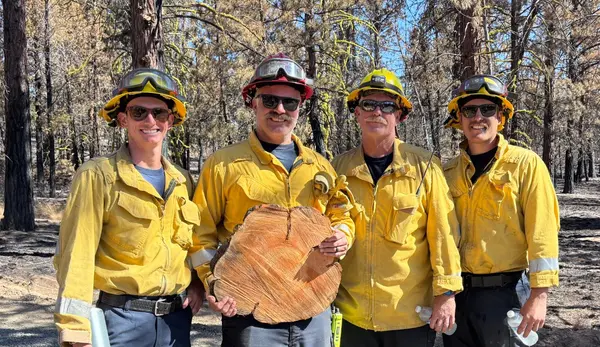
When people find out my husband is a Fire Captain and my son works with CAL FIRE, the questions come fast. I've been answering them for a lot of years now, and I've noticed they're almost always the same ones. So here they are, answered honestly, because if you're part of a first responder family you'll recognize every single one, and if you're not, this is what our version of normal looks like.
"Aren't you scared every time he goes to work?"
Honest answer: no, not every time. You can't live that way for decades, and fire families don't. What you do instead is build a quiet trust in his training, his crew, and the fact that he's good at his job. The fear doesn't disappear. It just gets filed somewhere you don't visit daily. There are moments it comes back out, usually when the wind kicks up in October or the phone rings at an odd hour. But scared every shift? No. Mostly it's just Tuesday.
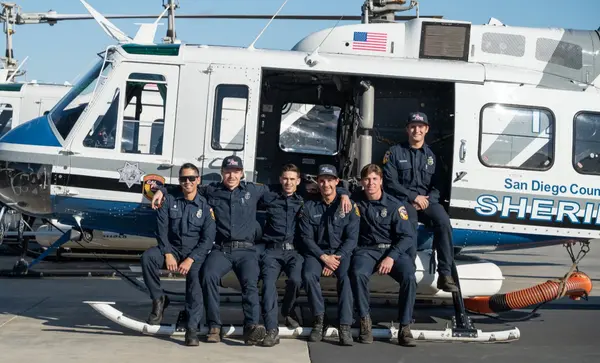
"Does it make you nervous that your son is on a helicopter all the time?"
This one gets its own answer, because a mom's nerves and a wife's nerves are not the same thing. I trust my son's crew, his pilots, and his training the same way I trust my husband's. But I won't pretend a helicopter is just another day at the office for my heart. What I've learned is that his confidence is contagious. When your kid talks about his work the way mine does, steady and matter-of-fact, you borrow some of that steadiness. So yes, sometimes. And also, I've watched that aircraft do work that saves homes and lives, and it's hard to stay nervous about something you're that proud of.
"How do you sleep when he's on a fire?"
You learn. The first few fire seasons, not well. After that, you figure out that staying awake doesn't bring him home faster, and that a wife running on no sleep helps nobody. You sleep with the phone on the nightstand and the volume up. You get very good at waking up completely, instantly, when it buzzes, and equally good at falling back asleep when the text just says "all good, eating dinner finally."
"Do you actually know where he is right now?"
Sometimes generally, sometimes not at all. During peak season, "where" can be a fire two counties away or three states away. Strike teams go where they're sent. You learn geography you never planned to learn. I can tell you where a lot of obscure ridgelines and tiny towns are in California because at some point, someone I love was standing on one of them. The fire family information network is real, by the way. Spouses find things out fast, and we pass it along.
"How long will he be gone?"
The truest answer in the fire service: nobody knows. A strike team assignment might be three days. It might be fourteen. Plans get made in pencil from May to November. Birthdays, anniversaries, the county fair, sometimes Christmas. You celebrate when everyone's home, whatever the calendar says. Our family has celebrated holidays on the wrong date so many times that the wrong date started feeling like ours.
"Is 'I don't know when I'm coming home' the official firefighter family motto?"
Yes. Someone should put it on a t-shirt, and knowing the fire community, someone probably has. It gets said at the front door, over the phone, in texts from staging areas. It's not evasion and it's not drama. It's just the most honest sentence in the fire service, and after enough years, hearing it stops feeling unsettling and starts feeling normal. The reply on our end has its own standard script too: "Okay. Be safe. Love you." Whole conversations, four words each way. Fire families are efficient like that.
"Why can't he just come home early?"
Because the fire doesn't care about the barbecue. I say that with love. When people ask this one, they're usually being kind, wishing he could be there. But the job doesn't work that way. Coverage has to exist. Relief has to arrive before anyone leaves. It's a system built on nobody walking away from it, and honestly, that's exactly the quality you want in the person showing up to your emergency.
"Does he really work for 24 hours straight?"
Yes, and often longer. A standard shift is 24 hours, and schedules like a 48/96 mean two full days on, four days off. On a big incident, "shift" stops meaning much at all. He's not working every minute of those hours. He's living at the station: training, running calls, maintaining equipment, cooking, and yes, sleeping when the calls allow it. Which brings me to the next one.
"Do firefighters actually sleep at the station?"
They try. There are beds, and there is technically a bedtime. There is also a tone that can go off at 2am, and 3:15am, and 4:40am, and each time he's up, dressed, and rolling in about a minute. Imagine sleeping every night knowing an alarm might launch you into someone's worst moment, and then coming home and being asked why you're tired when "you got to sleep at work." Fire spouses know better than to ever say that sentence.
Why I'm telling you all this
Because this is the part of first responder life that doesn't show up on a pay stub or a loan application, and it's the part I actually know from living it.
Dinner at our house has been scheduled around a shift calendar for as long as I can remember. I read the August sky the way other people check the weather app. I know what it means when the air smells a certain way and the helicopters start moving. That's not a hardship story. It's just a different shape of life, and thousands of families around here live some version of it, whether the uniform is fire, law enforcement, EMS, dispatch, or hospital scrubs.
It's also why I do what I do. When a firefighter or a deputy or a nurse sits down with me to talk about buying a home, I'm not imagining their life. I already know the schedule math, the overtime swings, the reality of house hunting when one of you is on shift for half the tours. And it's why I'm part of Homes for Heroes, a program that gives real money back at closing to the people who live this life. In my house, that one is personal.
The bottom line
One honest caveat before I wrap up. These questions are fine. Nobody in a fire family is offended by them, and we know they come from a good place. But they're also not really helpful. They put us in the position of either reassuring you or reliving the hard parts, and neither one does much for anybody. So if you know a fire family and want to actually be useful, skip the questions and try this instead: "How's the season going?" always works. So does dropping off dinner during a long deployment, or just not making a thing of it when we show up to the party solo again.
If you're a fire family, I hope this one made you nod. If you're not, now you know.
And if your household runs on a shift calendar and you're thinking about buying or selling, I'd love to help. I speak the language, because it's the one we speak at home.
https://www.homesforheroes.com/affiliate/jennifer-kleist
Next in the series: Part 2, Overtime and Your Home Loan. What Counts, and What Shouldn't.
Jen Kleist, Realtor® DRE #02228818 | Coldwell Banker West
Categories
Recent Posts
GET MORE INFORMATION