

Solar Panels and Home Value: Asset or Headache When You Sell?
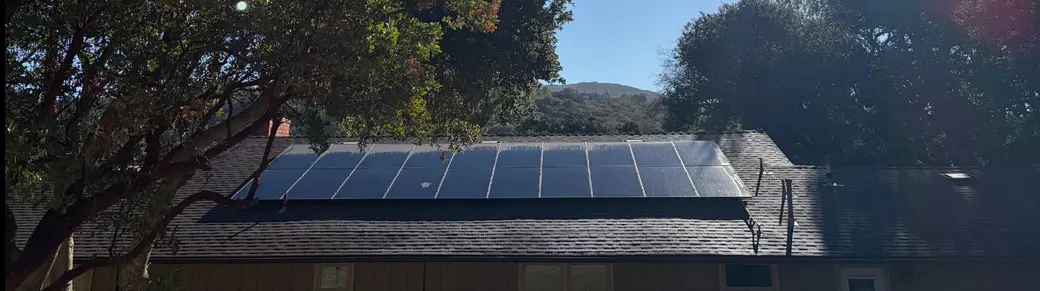
Solar Panels and Home Value: Asset or Headache When You Sell?
Drive through Alpine, Descanso, or Pine Valley and you will see solar on rooftops everywhere. It makes sense. We get the sun, our summers are warm, and SDG&E rates are some of the highest in the country. So a lot of folks made the move to solar, and a lot of buyers love the idea of inheriting it.
Here is the part most people do not hear until they are already in escrow: solar can absolutely be a plus, but it is not automatically money in the bank when it comes time to sell or buy. The details matter, and a few of them can slow a deal down if nobody looks ahead.
Let me walk through both sides.
The upside is real
When the panels are owned outright and the system is in good shape, solar can be a genuine selling point. Lower electric bills are a real draw in our area, especially for buyers who have seen what a summer SDG&E bill looks like. Owned systems tend to add to a home's appeal and can help it stand out. Pair the panels with a battery and you also have some backup when the power goes out, which anyone who has lived through a mountain outage will appreciate. For the right buyer, it is a feature worth paying for.
Why it is not always a value add
The trouble starts when we assume solar always increases value. It depends.
Appraisers do not give the same credit to leased panels that they give to owned ones. Owned panels are an asset. Leased panels come with a monthly obligation that transfers to the new owner, so they read more like a liability than a bonus. Some buyers also see a leased system as a hassle rather than a perk, which can actually narrow your buyer pool instead of widening it.
Age matters too. An older system may be near the end of its useful life, built on dated technology, or sitting on a roof that is itself due for replacement. Re-roofing around old panels is its own expense.
If there is a lease, the buyer has to qualify for it
This one surprises people. If the seller has a solar lease or a power purchase agreement, the buyer usually cannot just take it over automatically. The solar company runs its own credit check, and the buyer has to qualify to assume the agreement, often with a minimum credit score.
If the buyer does not qualify, the deal can stall. The options at that point are not always cheap. The seller might have to buy out or pay off the lease, and those buyouts can run into real money. This is worth knowing on day one, not week three.
The lien and subordination snag
Here is the one that quietly delays closings. Solar leasing and financing companies often record a UCC-1 fixture filing against the property to protect their interest in the equipment. When a buyer brings in a new loan, the new lender wants to be in first position, which means the solar company has to subordinate its filing or provide a payoff and release.
That sounds simple. In practice, getting a solar company to process a subordination request can take weeks, and they are not always easy to reach. I have seen this hold up otherwise clean transactions. If there is leased or financed solar on a property, I start that conversation early so title is not scrambling at the end.
Where lending gets tangled
Even when everyone qualifies and the paperwork exists, the buyer's loan can be the thing that slows the close. A few ways that happens.
The lender will usually not fund until that solar lien is subordinated into second position behind the new mortgage. So the closing timeline is now tied to how fast the solar company moves, and that is outside everyone's control.
The lease or loan payment also counts against the buyer. Lenders fold that monthly obligation into the buyer's debt-to-income ratio, which can shrink how much home the buyer qualifies for, or in a tight case knock the loan off track entirely.
And appraisal value ties back in here too. If a seller priced the home assuming the panels add value but the system is leased, the appraisal may not support that number. That gap between price and appraised value lands right in the middle of the buyer's financing, and someone has to cover it.
If you are the seller, do your homework before you list
Most of the surprises above are avoidable if you sort out the details before the sign goes in the yard.
Start by knowing exactly what you have. Owned, leased, or financed are three different conversations. Pull your documents now: the lease or purchase agreement, the payoff or buyout amount, the transfer requirements, and any warranty or production paperwork. If the panels are leased, find out what the solar company requires to transfer the agreement and how long that process really takes.
It is also worth deciding ahead of time whether to pay off or buy out a lease before listing. Sometimes a clean, owned system markets far better and removes a hurdle that might otherwise scare off a buyer or their lender. Sometimes it is not worth it. That is a numbers conversation, and it is easier to have before you are under contract.
Last, plan to disclose. Solar arrangements, liens, and transfer terms are exactly the kind of thing buyers and their lenders will dig into, so getting ahead of it keeps the deal calm.
The new SDG&E charges, and why older systems get hit
This is the piece that has changed, and it matters most for older systems.
In October 2025, SDG&E rolled out a Base Services Charge. It is a fixed monthly charge that all residential customers pay, including those with rooftop solar, and it cannot be offset by your generation credits. So even a home that produces plenty of its own power will still see a monthly charge it did not have before. San Diego Gas & Electric
Older systems feel a second pinch. Homeowners who installed under the older net metering programs were grandfathered onto those more generous rates, but when that legacy period ends, the account transitions to SDG&E's Solar Billing Plan. Systems interconnected after April 14, 2023, or that are more than 20 years old, fall under that newer Solar Billing Plan, and under that structure the credit for energy you send back to the grid is time-sensitive and often lower than what you pay to pull power back. In plain terms, an older system may not save what its first owner once enjoyed, and a buyer should not assume the panels will zero out the bill. San Diego Gas & Electric + 2
The bottom line
None of this is me talking anyone out of solar. I like it, and for the right home and the right buyer it is a strong feature. The point is to go in with your eyes open. Know whether the panels are owned, leased, or financed. Know what tariff the system is on. Know whether a buyer has to qualify and whether a lien needs to be cleared. Handle those things up front and solar stays an asset instead of turning into a surprise.
If you are buying or selling a home with solar anywhere in our mountain communities, this is exactly the kind of thing I dig into before it becomes a problem. Reach out and I am happy to walk through your specific situation.
Jen Kleist | DRE #02228818 | Coldwell Banker West
Categories
Recent Posts






GET MORE INFORMATION